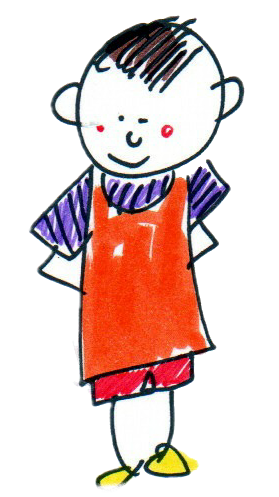
Children see things for what they are. A broken sidewalk is a broken sidewalk — not "it's always been like that." An abandoned space is a wasted space, not something normal. And a beautiful place is a beautiful place, even if we have stopped noticing it. Neighbourhood Eyes starts here: from the gaze of those who haven't yet learned not to see. The children go out, observe, document. The neighbourhood looks through their eyes, and together they decide what it takes to make it better.

Vestibolo APS + Comitato Quartiere Carbonazzi
Read in
Italiano English

Occhi di Quartiere

How the children prepare

Before going out, the children follow a classroom programme with their teachers. They learn to look at public space and to turn what they see into something that can be communicated: a photograph, a position on the map, a clear description.

They learn how to move safely through the neighbourhood, what a pedestrian crossing means, why a broken sidewalk is a problem for everyone. They try moving blindfolded or in a wheelchair to understand what someone whose body is different from theirs lives through every day.

When they go out, they are ready. They walk in groups of five or six with an adult, along set routes covering different parts of the neighbourhood. Each group looks, photographs, marks the map, writes. It is not a field trip — it is a survey, carried out by children who know exactly what to look for and how to document it.

How it works

1

Discover

The children learn to turn what they see into a clear message. Road safety, barriers, accessibility, local resources. In the classroom they learn to describe public space through a geotagged photograph and a written comment produced together with their group. Then they go out along set routes, heading in different directions, and map the neighbourhood.

2

Recognise

The children present the map to the Neighbourhood Committee and to families. Together they examine the reports, draw conclusions and vote on priorities. The priorities become formal requests to the Municipality, with official registration and public tracking. Every response — or every silence — is documented. A permanent co-design table is opened with the local government.

3

Design

Residents come together, discuss, imagine what they would like their neighbourhood to be. The Neighbourhood Proposal is born: a formal document that the community delivers to the Municipality with everything that has been observed, requested and obtained — and with a commitment to keep working together.

The neighbourhood

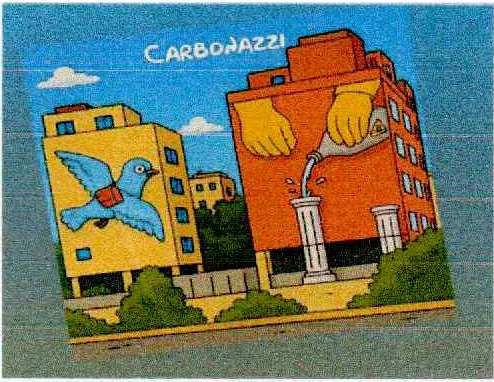
Carbonazzi, Sassari. 5,672 residents. A semi-central neighbourhood with the ICS San Donato school, the San Paolo Sports Club, the skatepark, the Cristo Redentore Parish, and Up & Down — an association that has been making theatre with people with disabilities for over thirty years. An active Neighbourhood Committee that knows the area and its needs.

Piazza Aldo Moro waiting to be brought to life, spaces that can become something better, home-to-school routes that can be made safer. The resources are there, and so is the will. Neighbourhood Eyes brings together the children's gaze, the residents' experience and the collaboration with the local government to build concrete proposals.

Quartiere Carbonazzi, Sassari — carbonazzi.vestibolo.org

Child Protection Policy

Our Child Protection Policy. The document that ensures the safety of every child in the project's activities.

Read the document →

Get involved

Neighbourhood Eyes is not run from an office. It happens in the neighbourhood, with the people who live there.

Here is how you can be part of the project.

Walk with the children

We are looking for adults willing to accompany groups of children during the mapping walks in the neighbourhood. The walks are in small groups, along set routes, with one adult for every five children. No technical skills are needed — just the willingness to walk alongside them and help them document what they see. For the protection of minors, a criminal record certificate is required — you can read how it works in our Child Protection Policy.

Write to info@vestibolo.org

Come to the meetings

The project includes open assemblies, workshops and public meetings in the neighbourhood. You do not need to sign up for anything to take part — just come. Your voice matters because the Neighbourhood Proposal is written with whoever is there.

→ carbonazzi.vestibolo.org

Follow the project on the noticeboard

On carbonazzi.vestibolo.org you can find everything that happens: the map with the children's reports, the Committee's communications, resolutions, votes and the status of requests sent to the Municipality. All public, all up to date.

→ carbonazzi.vestibolo.org

Become a member of Vestibolo

Vestibolo APS-ETS is the association behind the project. Becoming a member means joining the community that supports it — and voting on the decisions that shape our activities. The annual membership fee is €25.00.

Write to info@vestibolo.org or go to vestibolo.org/iscrizione

Donate your 5×1000

It costs you nothing. In your tax return, sign in the box for supporting Third Sector organisations and enter our tax code: 92184940903.

Make a donation

The project has real costs: tablets for the children, teaching materials, printing, transport. Even a small donation makes a difference.

IBAN: IT10U0101517200000070925991 — Reference: "Occhi di Quartiere"

Neighbourhood Eyes is a project by Vestibolo APS-ETS in collaboration with the Carbonazzi Neighbourhood Committee.
Submitted to the CERV-2026-CITIZENS-CIV-ENGAGEMENT call — European Union.
Partner school: ICS "San Donato", Sassari.
Illustrations: Maestro Giuseppe Giomi.